The trash giveth, and the trash taketh away
'Verity' did me wrong, but not THAT wrong.
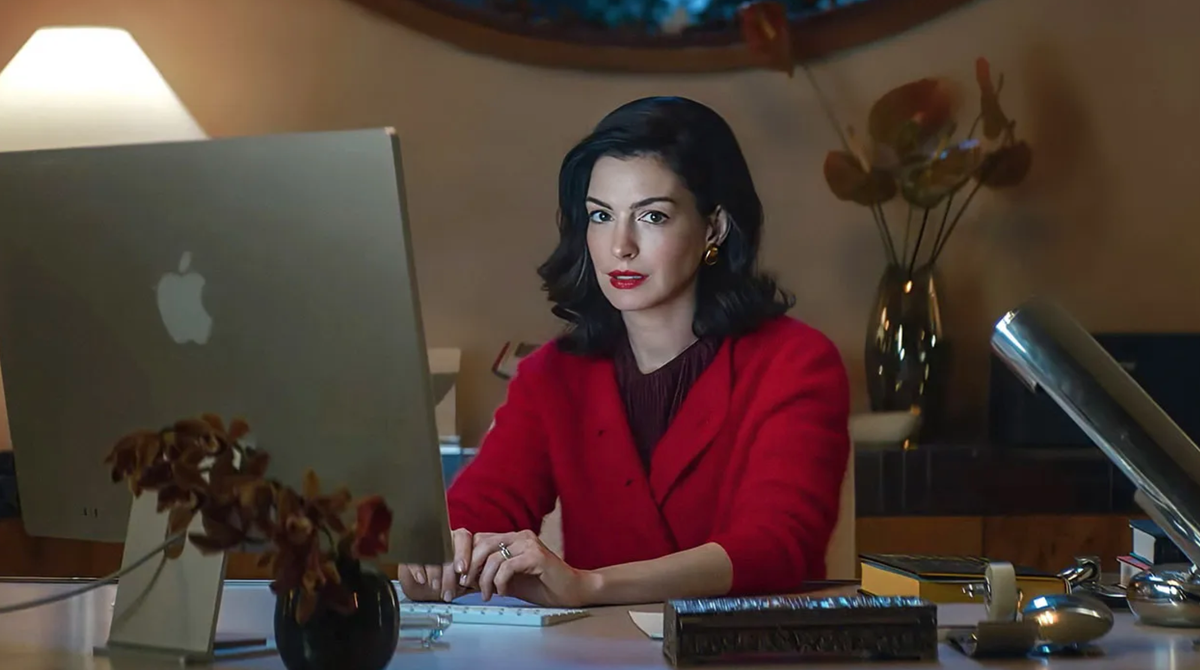
Sorry for the lack of posts the last couple of weeks. I was tied up with other projects, but really I was just clearing my calendar for Verity. As far as you know.
I was extremely interested in seeing Verity, a film marketing itself as trash of the highest order, based on a trashy novel by a noted trash merchant. If you recall my review of The Housemaid, you'll know that I not only desire and seek out the trash; my body often requires it. I was further over the moon to learn that the movie not only starred Dakota Johnson (our reigning Trash Queen) and Anne Hathaway (our Actual Queen) and served as another chapter in the much-appreciated Josh Hartnett renaissance/reclamation, but was directed by Michael Showalter, of whom I have long been a massive and unapologetic fan. (Believe it or not, this is actually the second time that Showalter has directed Hathaway in a film.)
With all of this in mind, it pains me to ultimately have to disclose that Verity is 60 percent of a perfect Trash movie and 40 percent an absolute train wreck. Unfortunately, that 40 percent is the final stretch of the movie, all in a row. A movie where the entire setup is complete exposition and explanation dispenses almost entirely with reason, logic and disclosure as it supposedly lays out its final twists and turns, leaving so much to the imagination and so much unsaid and unresolved that – were this a Coen Brothers movie, perhaps – would lend to interrogation and investigation, a seeking of a deeper meaning. But since this is pulp – since this is, unapologetically, Trash – any attempt to wrest nuance, subtext, or hidden import from what is left unsaid is an exercise in futility at best, and frustration at worst.
And it's a shame that a movie this absolutely sumptuous in lensing and production design and this loaded with talent ultimately clangs up against the absolute dearth of a final act worth committing to – or even worse, seeing that the source material ends just as pathetically, failing to improve upon a self-published novel that was only republished by a major player after the author's other works started going through the roof. Verity largely takes place inside one phenomenal Vermont lakeside mansion, one that makes the viewer absolutely drool from opulence. The mansion is the fourth lead of the movie, and I suspect it to be purpose-built, much like the house in Parasite. Unlike The Housemaid, which confines its principals to an elegant but cookie-cutter McMansion, the residence in Verity inspires greed, desire, awe, fear and avarice in equal measure. I want to roll around in the thick, plush carpeting of Verity Crawford's sunken office. I want to climb into the rock-hewn tub where Dakota Johnson delves into her Josh Harnett spank bank. One thing I won't do is stir my coffee with my finger – one of the strangest decisions I've ever seen an actor or a script make (and I don't think this one was Dakota Johnson's call).
I suspect that I would have liked Verity a whole lot more if I'd seen it in a world where The Housemaid didn't exist – or if I hadn't seen The Housemaid. For much of Verity's runtime, it unspools so thunderously similarly to The Housemaid that I began to suspect all of the twists and reveals would unfold in the same manner. And unfortunately for all involved, they largely do – up until it comes time for the film to end in a fashion that is at all satisfying, edifying or worthwhile. The Housemaid is the best kind of trash because it contains the release, comeuppance and resolution that an audience that has sat through a Trash Film not only expects, but absolutely deserves. Verity – and please believe me, this is not a spoiler in any meaningful sense – ends with none of that, and as a kicker, actually ends with a fake episode of Hot Ones. That isn't a joke.
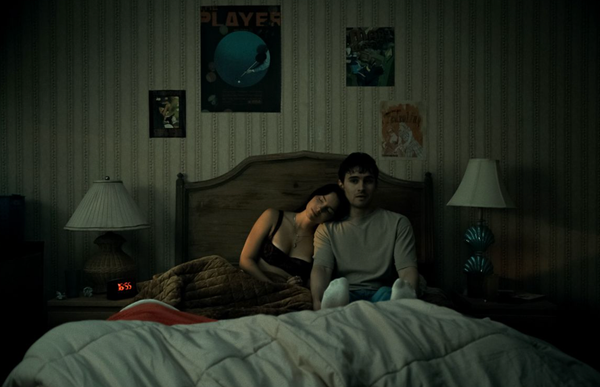
Showalter has, along with his cinematographer Jim Frohna (who has worked with the director before), crafted one of the absolute best-looking suspense/romance/Trash films you're likely to see. The settings are gorgeous, the shots are immaculate and the actors are crackling. It's a shame the script (by Nick Antosca, a serial show creator who ran Hulu's The Act and Apple TV's Cape Fear, among many others I haven't seen) is so devoid of any respect for the audience that it couches its complete lack of resolution as some sort of grand philosophical statement, rather than acknowledging it's slop for us piggies, and the piggies are instead left starving.