The fear is what keeps us here
A horror movie about toxic masculinity but also the danger of fear.
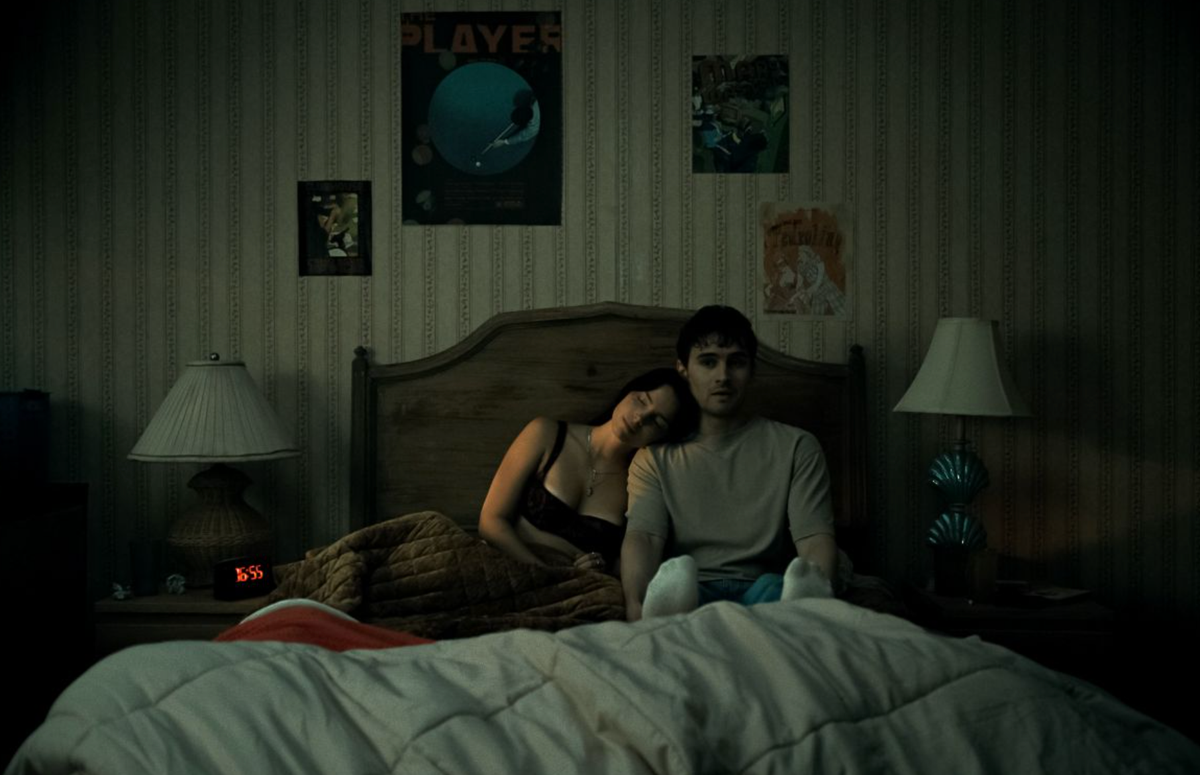
I will begin by admitting to being fabulously late to the party on Obsession, but not for lack of trying. Curry Barker's film was technically released in 2025, but the bulk of its global half-billion dollar theatrical run was garnered after its wide release beginning this May. I had to miss that theatrical run, given I was wrapped up going to screenings of Minions and Monsters and Toy Story 5 and the like, but I finally got a chance to see it on Peacock after it landed there this month.
I wasn't surprised that this horror film lived up to its near-universal critical acclaim. The magical realism concept at its core is a can't-miss concept, but it's really elevated into an all-timer (and easily one of the year's best) by its writing but more than anything else with a one-of-a-kind virtuoso performance by Inde Navarrette, who plays Nikki, the woman at the center of the film.
After watching the film, I'm simply stunned by its purported $750,000 budget. This is a movie that looks absolutely incredible throughout, at the very least on par stylistically with Talk to Me, the 2022 Australian horror film with a $4.5 million budget. Barker, who like many other filmmakers this year cut his teeth as a YouTuber, clearly knows what he is doing as a filmmaker. And if the stories are true that he turned down a larger budget if he would rewrite the film to turn Bear, the male lead of the film, into a hero, he has a clear vision and a voice that is contributing value to whatever genre he chooses to tackle next.
The conceit of Obsession is that the central character (not the protagonist), Bear, uses a wish to make the object of his affection "love [him] more than anything in the world." The rest of the film deals with the terrifying fallout of that decision. The film is a very explicit and extremely intelligent exploration of male dominance and power, the toxic creep of the plague of the "nice guy" and the insidious and unforgivable ramifications of denying someone their agency. All of that has been written about by people much more insightful and intelligent than me, so I wanted to take some time to explore a parallel aspect of the film: the concept of fear as a primary motivator, and how decisions made (or more accurately, not made) out of fear do a disservice to everyone.
Bear is, first and foremost, a coward. It is his most notable trait. He is afraid to tell Nikki, a very close friend, how he feels about her, because he (accurately) assumes she does not feel the same way, and doesn't want to risk his worst fears coming true. He is afraid to tell his friends that his cat has died because he doesn't want them to know that he has a legitimate excuse to not hang out (specifically, an excuse not to hang out with Nikki). He ends up buying the magical item that grants his wish because he's afraid to get Nikki a present she might not like. After his wish is granted, he's afraid to admit that he made the wish, and he's afraid to tell anyone any of the details of his relationship. He's afraid to be with Nikki and he's afraid to be without her.
Right up to the very end of the film, Bear remains a pathetic man so hamstrung by fear that he resists the solution to the problem that begins killing people, and a problem that he knows almost from the very beginning is torturing the woman he purports to love. His fear brings him right up to the brink of the movie having a truly unbearable (no pun intended) ending, and is only prevented by the final, incredible twist. The only salvation that arrives for anyone in the film is due to Bear being pulled out of his inescapable spiral of cowardice.
So here's the part where I admit that I completely identified with Bear, and that I was free to hate him, because he so clearly embodies parts of myself that I despise. I understand very clearly what it's like to be so terrified of an uncomfortable situation or a disappointment that you'll avoid it at any cost, even to the detriment of yourself and everyone around you. Not being honest out of fear and making things actively worse is a very, very tough thing to come to terms with, and it's something that I struggle with all of the time. There are countless moments in my life where I should have just told the truth, or said anything at all, but didn't because I was afraid. None of those situations were made better by my cowardice.
The flip side of that fear is unearned arrogance: the fear of telling someone your feelings, while having convinced yourself that you're worthy of their love. How could they not love you? You're the main character, after all.
Fear as a central component of the film extends beyond Bear. There are no fewer than three other characters in the film who keep things from him, because those characters are all afraid of hurting Bear's feelings. The "nice guy" syndrome is at work here, because they want to keep precious Bear safe, not understanding the horrific things he can be capable of if given the power to do so.
I'll be thinking about Obsession for a long time. Largely because of Inde Navarrette's performance, but also because it held up a mirror and made be acknowledge the role that fear has played in my life: fear of rejection, fear of embarrassment – even the mortifying ordeal of being known. It's an important reminder to be kind and to be honest, even if it makes you uncomfortable.