Wizards and waves
Two HBO series take a look at the athletes who need to risk death to be alive.
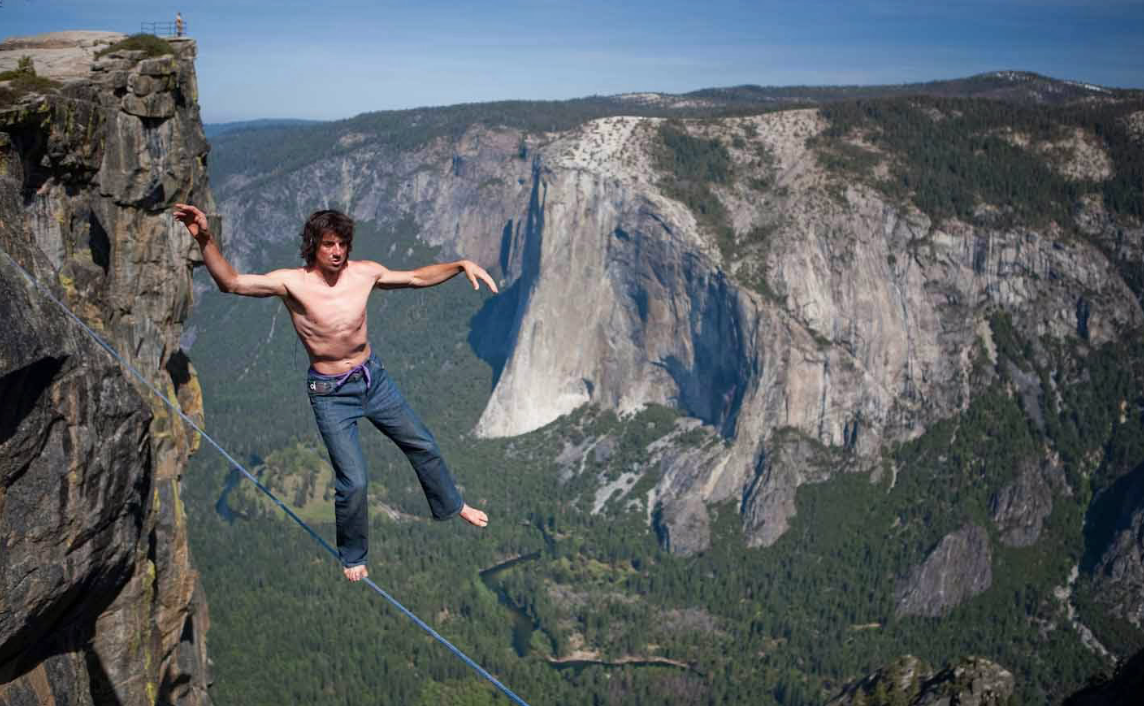
For a long time, I've had an intense fascination with stunts, daredevils, extreme sports and other thrill-seeking activities ... despite having zero interest in ever doing any of these things myself. I have an intense fear of heights, but I'm drawn toward watching videos of people doing things at extreme heights ... even when it freaks me the hell out and can even make me break out into chills or nervous sweat.
That inability to look away is maybe some fraction of what these athletes and thrill-seekers must feel: being drawn toward something that terrifies you because it gives you a sensation you can't experience in any other situation. HBO has two incredibly illuminating docuseries that I've been enjoying lately, both of which take a deep look at the psychology behind the people who take extreme risks while showing unflinching, jaw-dropping footage of things that are difficult to comprehend a human will willingly take part in.
The first and most recent of these documentaries is The Dark Wizard, a four-part miniseries about Dean Potter, a rock climber and BASE jumper who was just as much a sensation (if not more so, and certainly far more influential) in the rock climbing scene as Free Solo subject Alex Honnold (who plays a large part in The Dark Wizard himself). Potter is a fascinating figure, someone who was driven and tortured and had to constantly fight against his own impulses to compete against peers, to find respect from both the outside world and his own community, and to push back against whatever the imagined status quo was, to the detriment of his own livelihood. Halfway through the series, it is suggested that part of fueled Potter's death drive was a childhood trauma involving falling, and Potter's journals turn again and again to his perceived connection to ravens, and his desire to turn his recurring nightmares of falling into a vision of flying, which eventually led him to wingsuit flying.
Numerous bits of footage of Potter's feats in climbing, highlining, BASE jumping and wingsuit flying are orders more stomach-churning than anything depicted in Free Solo, and it seems both incredible and impossible that one person was able to will himself to do even half of the things that The Dark Wizard depicts. That force of will was a double-edged sword, of course, as Potter's hard-headedness pushed most people in his life away over the years. Even when, against all odds, Potter found his soulmate and a stable life and career, he returned again and again to risks he didn't need to take. It seems inevitable that if they continue to partake in top-difficulty excursions for decades, alpinists and BASE jumpers – and especially wingsuit fliers – will at some point not make it home. At that point, it starts to become a question of selfishness; of how highly they value the people in their lives who love them and whom they love, versus how much they love risking their own life.
To that last question, we turn to 100 Foot Wave, a documentary series that has just wrapped its third season. The show is somehow directed by Chris Smith, who came to prominence with the indispensable American Movie and moved onto other incredible documentaries like Jim & Andy: the Great Beyond, "Sr.", and Wham! He also played a big part in Tiger King, which is likely where most of his cachet in the industry comes from. 100 Foot Wave studies big wave surfers, particularly Garrett McNamara and his work establishing Nazaré, Portugal, as the premier destination for that particular niche of surfing.
Big wave surfing is, as you can imagine, the most dangerous form of surfing that someone can participate in, and it takes a group of people working very closely and very carefully to even pull off one successful run. The terrain and structure of Nazaré is particularly unpredictable and dangerous, and leads to a lot of terrifying situations. Like with rock climbing, it is inevitable that big wave surfers have had a lot of close calls, a lot of horrible injuries, and have lost a lot of close friends to their interest. Whether a function of an extended series or because of the ideology of the filmmakers, 100 Foot Wave makes more explicit than The Dark Wizard that nearly all of these surfers have experienced or are actively dealing with some form of PTSD, and talks to all of them in depth about the struggles that they're going through.
McNamara has a family, including young children, that he loves dearly, and he struggles constantly with his desire to conquer record-setting waves and how it conflicts with his commitment to return home. His wife recounts a harrowing story of him waking up from a surgery after shattering his shoulder capsule surfing, and being in such intense pain that he begs her for the means by which he can commit suicide. The ensuing depression, understandably, is impossible for them both to shake.
While these two documentary projects are linked by pain and inexplicable pull to the brink of human ability, they're also linked by undeniable beauty. Both of these groups of athletes have been privy to views, sights, sensations and experiences that can only be experienced by the people who participate in these activities, but the cinematography and footage in both projects – particularly in 100 Foot Wave – is breathtaking in scope and grandeur.
I greatly appreciate both of these projects existing, but I'm most grateful that they both concern themselves with the psychology behind the subjects, and looking at the principal individuals with empathy, compassion, and an attempt at understanding, even if we'll never understand what it's like to be inside the head of someone who needs to live their life hanging off the side of a mountain or a wave the size of an office building.