'I hope I mattered'
The phenomenally cursed DC cinematic universe remains cursed.
I've had that headline locked since the penultimate episode of HBO's Lanterns, a tremendous series that worked like 90 percent of the time and seemed to have finally threaded the needle that studios have been trying to thread my entire lifetime: how to make a superhero TV show (or movie) that would please executives who are deeply embarrassed to be making a superhero TV show. Lanterns succeeded largely on the strength of its two leads, Kyle Chandler and Aaron Pierre, and by leaning on a universal constant of the established DC Comics canon: that Hal Jordan (played by Chandler) is an asshole who is great at only two things: being a Green Lantern and pushing everyone in his life away from him. At Jordan's (not a spoiler) funeral, Pierre's character, John Stewart (no relation), reads the eulogy that Jordan had written for himself ahead of time. "I hope I mattered" is the final, achingly brutal line in that speech.
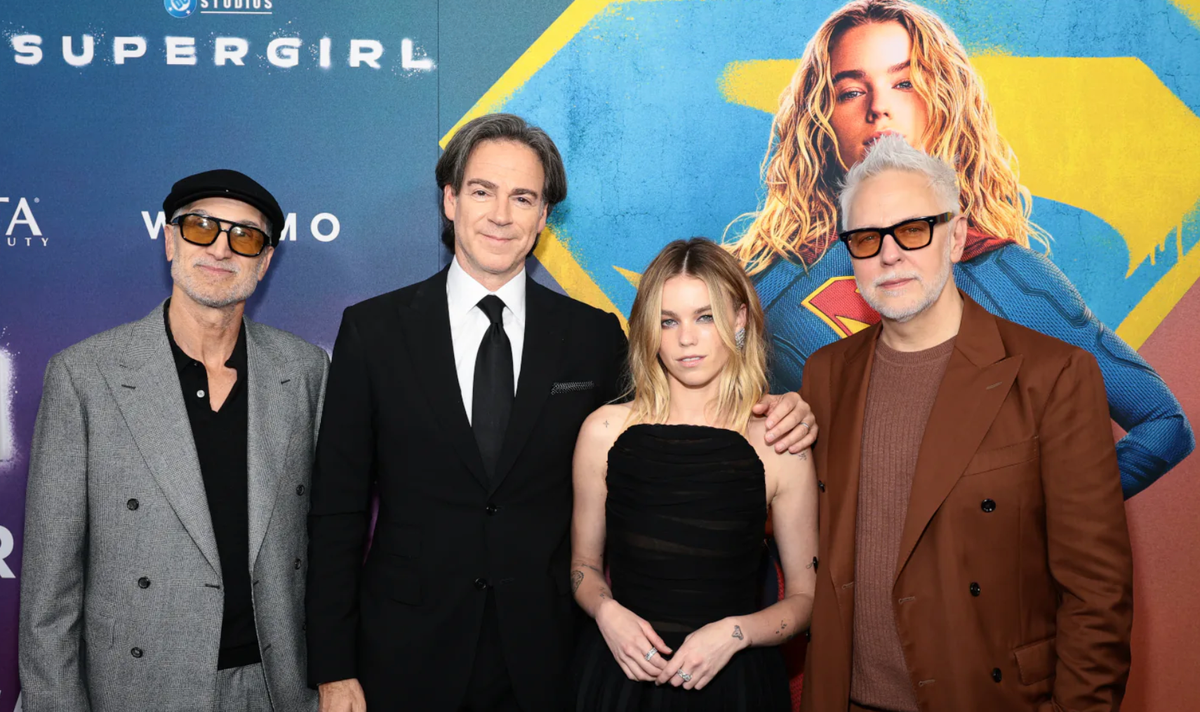
But anyway, it turns out that I'm not going to write a post about Lanterns, because "I hope I mattered" has ended up being appropriate in a different way following the Skydance/Warner Bros./Paramount/whatever-the-fuck merger that has resulted in the unceremonious shitcanning of the current architects of the DC movie and television universe, James Gunn and Peter Safran.
The pair had been installed as the CEOs and architects of a new DC Universe and its attendant film and television division in 2022 after Gunn's extremely well-received turn on the Guardians of the Galaxy trilogy for Marvel and for his work on the second Suicide Squad movie and related Peacekeeper series for HBO. Gunn and Safran had mapped out a large and in-depth multiplatform long-term plan for the DCU, which has been cursed and in flux for about as long as there have been movies based on DC characters. (Yes, dating all the way back to the Richard Donner and Christopher Reeve Superman films.) Gunn and Safran should get extra credit for managing to navigate the mandates of the WB/DC overlords, which included that the entire established DC cinematic canon should be upended except for stuff Gunn had already created – and except for Batman, which would continue on in his own pocket universe as currently portrayed by Robert Pattinson and written and directed by Matt Reeves. As things shook out, Gunn was only around long enough to write and direct 2025's successful and well-received Superman and to produce 2026's severely underperforming Supergirl. (Gunn, Safran and Reeves worked together to produce the overperforming Clayface last month, a horror movie about a Batman villain that neither mentions nor features Batman.) The Superman sequel, Man of Tomorrow, also written and directed by Gunn, is already shot and in post-production, with a supposed release date of July 2027. The Brave and the Bold (which was to introduce the non-Reeves version of Batman to Gunn's universe), Swamp Thing and a Wonder Woman reboot were all in development when Gunn and Safran were fired, and Superman television spin-offs The People v. Gorilla Grodd and Mister Miracle were meant to be released form 2027-2028.
DC has been putting its characters on film and on television since the 1940s, and with the exception of Batman and certain iterations of Superman, it's rarely worked out like they expected. Of course, most of that can be chalked up to whatever parent company holds the DC licenses at the time having no idea what to do with any of the characters, and usually going to the Superman and Batman wells out of a sense of obligation and not because they appear to have any interesting stories to tell. There was a long-running and sprawling "Arrowverse" featuring DC characters on the CW across six series over the course of 11 years and something like 600+ episodes of television and I've never seen a single one of them. It's likely that WB executives didn't see them either, as their cinematic DC counterparts around the same time period, initially shepherded by Zach Snyder, did not even consider intersecting with them. Snyder's vision of a DC cinematic universe was its own disturbing kettle 0f off-putting fish, especially viewed in parallel with Christopher Nolan's contemporary trilogy of Batman movies, all of which were cultural phenomena and critically adored. Of course, the "good" Batman movies were also not allowed to intersect with the rest of DC, as Christian Bale's version of Bruce Wayne/Batman was replaced by Ben Affleck by the time Snyder was allowed to put a version of Batman into the larger universe. Wouldn't want to get that DC stink on Nolan's Batman movies, would we?
While Snyder's (and later Safran's, pre-Gunn) version of the DC universe later scored accidental mega-hits with the first Aquaman and Wonder Woman movies, the bloom was already off the rose with Warner Bros/HBO by the time their directionless sequels rolled around, and Gunn was finally handed the creative reins after Dwayne Johnson attempted to change the balance of power forever with Black Adam, an honestly totally acceptable (if not mostly good) film that turned a modest profit (maybe) but was a complete fiasco in general.
As recently as early October, the incoming Skydance bosses were singing the praises of Gunn and Safran and promising that they would be allowed to continue their plan as intended (which included a schedule featuring a Superman movie from Gunn every two years until the eventual Justice League film), but then this week, the DC honchos were shown the door. In their place is Jeremy Latcham, a former SVP for Marvel under Kevin Feige, who a few months ago appeared on Christian Broadcasting News while promoting Nate Bargatze flop The Breadwinner to explain that he wants to place an emphasis on "faith and family-based" films. People (including me!) are connecting the dots on what it means that this guy with this ethos is replacing the beloved and respected Gunn and Safran. (We can also take a shot in the dark at which faith Latcham's movies will be foregrounding, as Superman has always notably and profoundly been an allegory for the Jewish experience in America.)
I guess after the sweeping losses at the polls last week, right-wing allies like the Skydance corporation needed to claw back some semblance of a win, and getting those edgy heathens out of the Superman business is a way that they can feel better about themselves. Good luck with all that, I suppose. As usual, studio honchos remain the dumbest people alive, and whoever owns DC characters will jettison the closest thing their IP has ever come to a cohesive vision just because someone's feelings got hurt somewhere. The curse, as ever, will continue. But maybe torpedoing a cash cow is exactly the sort of thing that a monopoly deserves.
Here lies DC. It died the way it lived: stupidly.