Pulley frontman Scott Radinsky talks 30 years of baseball and punk rock
An extended interview with a legend in two spheres.
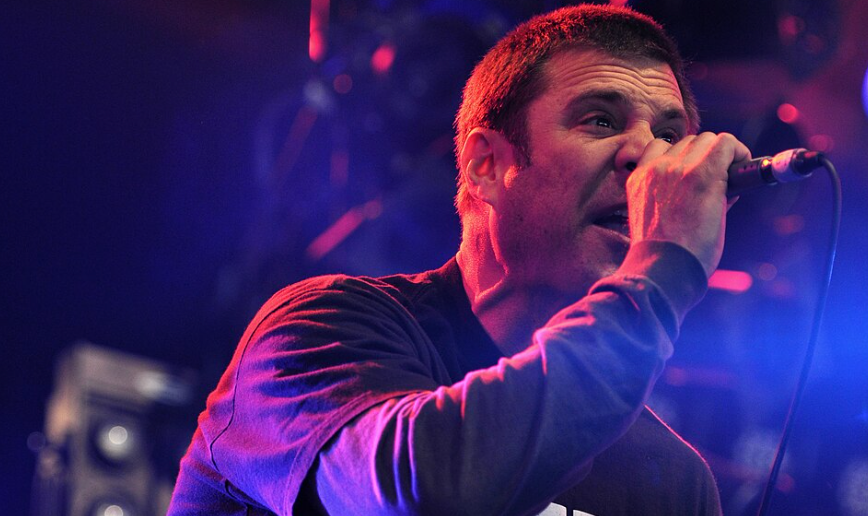
On November 13, California punk stalwarts Pulley released Rise of the Underdog, a two-song 7” from Negative Progression Records. By sheer happenstance, the new music is dropping just one month after the 30th anniversary of the band’s first album, Esteem Driven Engine, which came out on Epitaph in 1996.
At the time of that debut album’s release, Pulley was considered to be the closest available thing to a pop punk supergroup, featuring former (and in one case, current) members of Ten Foot Pole, No Use For a Name, and Strung Out. The band played up that status, even naming their publishing company “X-Members,” but three decades and many lineup changes later, Pulley has still been putting out music at a regular clip.
Frontman Scott Radinsky was a dual celebrity within the punk scene at the time of Pulley’s debut. Already a known entity during his time singing for Ten Foot Pole, Radinsky was an MLB relief pitcher, having been drafting out of Simi Valley High School by the Chicago White Sox. By the late 1990s, his status as a punk singer and pro baseball player was notable enough that he was featured on an MTV Sports segment. He played pro baseball for around 15 years before retiring in 2001, and has kept a foot in both worlds as a pitching coach and coach at various levels, from minor league ball to the Guardians and Angels, all the way to coaching UVV Utrecht in the Netherlands for the Honkbal Hoofdklasse.
I got a chance to speak to Radinsky by phone as he prepared to play a pair of shows in Hawaii with Pulley, and asked him about the changing natures of punk rock and baseball over the past 30 or so years, as well as his legacy in both arenas.
BILL HANSTOCK: When I got the press release about the new 7”, I was sort of taken aback, learning that Esteem Driven Engine came out 30 years ago, which means I’ve been listening to Pulley for 30 years now. How does it feel to realize that this is such a big anniversary for the band?
SCOTT RADINSKY: It's crazy when you think about how fast time goes. I was part of this compilation that came out in ‘84, by our local area in Oxnard, called Nardcore, and that's already surpassed the 40-year anniversary. I haven't digested or really swallowed like, wow, maybe we've we've done a lot. We put out a lot of music. We've played a lot of shows, we've been doing it consistently for a lot of years, but I think we're all just grateful that we still have the opportunity. So the fact that 30 years or 40 years snuck up so quick — it's pretty amazing.
Do you want to talk a little bit about how your new 7" syncs up with the 30th anniversary of the first Pulley album?
Well, there was really nothing intentional about the 30-year anniversary. We released a couple of songs, a split 7" last year with a band on the label, Negative Progression.
And so we just started having some conversation about putting out some more songs and we thought, let's do like another split 7". And [the label] said [they] would rather have us do it on our own. So that's just kind of how it came about. You know, the commitment and the time it takes to do a full length [album] – the amount of money, the lack of sales that make it worthwhile. [The new single] just seemed like a good way to go. So we did it real quick; figure we'll go in and knock out a couple songs.
I guess ironically it lines up with the uh, it lines up with the previous release, but there was no intent behind that, just a happy coincidence. But yeah, it's kind of cool, for sure.
I really enjoy the songs on the new 7”. You and I have both been following bands for many years, and sometimes you'll run into a band that that stays together, but the music sort of takes a dip over time. To me at least, everything that Pulley has ever put out has maintained that same level of quality. Is there a secret to that?
I think we just kind of stuck to what we thought we were good at and didn't really try to invent ourselves into something different. There was recently a re-release of the second Bad Religion album that ever came out, called Into the Unknown, and it was completely experimental, with an organ and everything else. And they regretted that, or maybe got that out of their system, and then they went on to just continue doing what they were good at. And I try to think about a Bad Religion release, and you kind of know what you're going to get. And I think that's the goal, when we write is to not to be completely monotonous and and just regurgitate what we've previously done. We have a style that we started with, and we've kind of stuck with and maintained it and that's just kind of what comes out of us naturally when we write. So. I don't think it's a conscious effort. I just think it's, “Oh, we're writing new songs and this is what we do and this is who we are.” So this is what it's going to sound like.
How collaborative is the Pulley songwriting process? Do you all write songs individually and then get together and work them out?
Over the years, it's changed. I'd say the last 10, 15 years, one of our guitar players, Mike [Harder] and myself do most of the writing, both musically and lyrically. We'll usually kind of get together and sketch things out before we bring it to the other guys just because we're writing around vocals and we don't have time anymore to go in the rehearsal room and spend hours upon hours [working it out].
So, we kind of do that like, I guess it would be considered pre-production, you know, to writing a song. And since I'm singing and usually have a pretty decent idea of "Well, I can sing this" or "I can't sing that," so we can mix stuff before we even go to the next process. We come up with a melody over a verse or a melody over a chorus and then we just kind of elaborate. And then we bring it to the room with the other guys. They throw their two cents in there and add and complement with their input, but as far as the structure of the song, we try to hash that out before we get in there.
I've heard you and read you talk about growing up in the Simi Valley area and going to see Fear and other contemporary acts in the scene growing up. You've always had such a distinctive singing voice that's set you apart. Who do you credit as any influences on your singing style?
I think in the early '90s, when the music started getting a little more melodic, I was just able to sing. I was never considering myself a good singer, but I definitely wasn't a good screamer back in the '80s. There's voices that were more distinct [as screamers], I felt like I was just kind of generic. But I always felt like I could sing and once that style started morphing in that direction ... I mean, some of the earlier Ten Foot Pole, or some. of the earlier stuff I sang in that melodic style, it was a starting point. I'd like to think I got better at melody and creativity and harmonies over the years. The more times you record, the more songs you write, hopefully the better things get.
So I don't know if I can credit one particular influence. I loved Dag Nasty. I thought they were about as close to a hardcore melodic band [as you can get]. Dave Smalley's voice was pretty incredible. And then when he went into ALL, I saw that style of where he went from like the hardcore melodic singer to almost like singing.
If I had to, that's the first name that comes to mind. And then of course, Bad Religion. But I think I'd rather go on the Dave Smalley side.
That's so funny. That never would have occurred to me, but the instant you said "Dave Smalley," I'm like, oh yeah, that makes sense.
Well, good. Oh, good.
So now that you've been singing for punk bands for about 40 years, you now see people coming up who are influenced by you and your singing style. How does that feel to experience that?
You know, when the we're at a show or we get a letter or an email or something and someone's talking about how our music got them through a tough time or when someone says, well, I love your voice ... I mean, what, what can you say other than just being humbled? It's just gratifying. It's humbling. It's a, "Thank you." You stick your hand out, you shake it and you have a conversation. You're appreciative.
It's a trip, though, because you don't see it that way as the person that's [being praised]. I'm sure if you ask Aaron Judge, does he think he's the best player in the league, he's probably not going to say yeah. But in reality, he probably is ... so maybe that's a horseshit reference. But it's humbling. It's humbling, man, when someone comes in, you're appreciative. And like I said, you stick your hand out and you say thank you.
You were born in Glendale, you grew up in Ventura County, where you got drafted out of high school. Who did you root for when you were when you were growing up?
Well, back then all we had was the Dodgers. I was a little I was a little north of L.A., so I definitely wasn't an Angels fan. I was a Dodger fan, especially during the ‘70s and early ‘80s, when I was really following them.
So when when you got a chance to finally pitch for the Dodgers as your second major league team, what was that like for you?
I can't even put it into words. The day I became a free agent and and the White Sox — I don't know what the right term is — non-tendered me? My first thing I wanted to do is say [to my agent], “Let's see if we can get to the Dodgers.” I actually had to sign a minor-league deal in order to get myself to camp, and I remember the [Dodgers] GM, Fred Claire, calling me. It was a Sunday, and he said, “We're going to give you every opportunity.” And I know it's probably cocky, but I said, “If you get me to spring training, I'm not worried about making your team.” And then like 10 minutes later, Tommy Lasorda called me and gave me his whole bullshit, you know: “This is the best organization. We're gonna give you every opportunity,” and blah, blah, blah, blah, blah. And it was awesome. I got to spring training. I went to Vero Beach and that's the field that I saw my whole life on TV, you know, during [spring training] when they play a game on a Saturday. And it was 3 of the best years of my life. I lived at home. I had a 33-minute drive to the field. It's every kid's dream, and I got to live it for 3 years.
When you wound down your career, what was the transition like for you to go from being a player to coaching?
You know, I think any player that gets into his 30s and and gets towards the end of his career … now you're all of a sudden standing in the outfield during batting practice shagging with a 22- [or] 23-year old. You kind of have this, elderly statesman [role] where they start asking you questions. You’re the veteran of a team, so you almost take that responsibility on as a player.
And then transitioning into coaching: when I started with the Indians, [then-General Manager] Mark Shapiro was awesome. The first year, what he had me do was just kind of go to a minor league team for a week, watch the rotation, come back home, report on it. And then a few weeks later, go out to another minor league team. So I kind of slowly was introduced to the organization, all the players, all the coaches, all the trainers, anybody that was involved in that system that I went to instructionally. And then when they asked me if I had interest in becoming a full-time coach, it was a smooth transition for me because of the way he kind of brought me along into it.
When you started as a coach, it was in the nascent Moneyball era, but then you've continued to be involved in baseball as it's become more analytically inclined — with the advent of Driveline, spin rate, similar metrics. How much has coaching really changed as far as nuts and bolts, or is it all just pitching mechanics?
It's just different terminology. I think some of the old pitching coaches that I had — it might not have been as scientific. I think the players now, at least from my experience … it's a push-button era, man. Like, you want an answer, you hit a button, boom, there it is, however you can source that. You can get instant feedback. And I think players rely on that now.
When I first came up, we didn't even have videos to watch back. Some of the clubs I was with, they had those big VHS tapes, or beta, whatever it was, but we didn't have any players to play it on. Then they had these little DAT [tapes], or whatever they were, little, some kind of little tapes, and these little flip-up Sony machines, and it was super tiny. I guess to me it's the same nuts and bolts, just different verbiage. Maybe [now it’s] a little more accurate. a little more specific, but that's kind of hit or miss too, depending on who's digesting it and who you're getting the information from.
Would you say that the baseball business or the music business has changed more during your time in both worlds?
Oh, they both changed extremely. I mean … Spotify, Driveline. You could just go on and compare, but it's changed a lot. You used to have to go buy a record in a record store without even knowing what you were getting and you just judge it by the cover. Like an old coach back in the day, you'd come in the dugout and you'd say, “Hey, you know, you look like you're leaking out front a little bit.” Well, now, by the time the guy comes in the dugout, we got some scientific proof that shows you're leaking and I can show you to the millimeter. And if I want to download a song or download an album without even having to go to a store, I can do that.
What can you tell me about Honkbal?
Honkbal rules. It's a tournament they’ve had in Haarlem, Netherlands for God knows how many years. Teams from uh, all different countries come in the middle of their season. They take a like a two-week break, a ten-day break, whatever it is, and they do like international tournament stuff.
European baseball is so exciting. It just doesn't get the notoriety because there's not the corporate money. There's not the fans that are as interested because obviously it's football- or soccer- (whatever word you want to use) driven continent, but baseball's awesome in Europe.
What stands out to you about coaching over in Europe?
Well, for me, it was the passion. It kind of reignited me. I learned baseball here in the United States. I mean, it's the best, and we have the best facilities, the best everything. But I got over there and it kind of reignited me. Things over here just kind of got a little sterile for me. You know, it was like, didn't matter what organization. It was the same shit. “This is the way we're going to do it.” And, you know what? The cream's always going to rise to the top. So how much are you really coaching in the US? You know? I never felt like you're making a connection on a human level with a player. You're trying to help unlock that compartment inside of them that's going to unleash their best, and you try to put them in a good situation to succeed.
Over there, you're actually making an impact, hands-on. The passion was just … I'm a DIY kind of guy. So to be somewhere where it still feels like it's kind of at ground-level, that's where I want to be, man, with a startup. I'm not going to get bitter. Here, if you go to organizational meetings, there's 70 people sitting there chiming in. Over there, it might have been 4 or 5 of us and your input mattered. I felt like here, it started falling on deaf ears after a while, as the years were going on.
Getting back to the DIY ethos: Whether it was intentional or not, during your playing career you were often position as an iconoclast. I remember you having that segment on MTV Sports where you're throwing a baseball through a canvas, and the, "He's a baseball player who listens to punk rock!" talking points. Did you ever feel like there was anything in the demographic makeup of Major League Baseball that left you feeling isolated? Or is it just leaving your personal stuff outside and you're all a team once you're on the field?
Definitely leave the personal stuff at the door. I felt that way in high school as well. You know, I wasn't really a jock – we didn't hang out with each other. We'd walk by each other in school and say hey, but I didn't hang out at lunchtime with the baseball team or anything. As soon as we got on the field, we're in the same uniform, and we were all part of the same team, and I definitely think that's the way it was in [MLB].
It's funny, like the isolation, I felt like before the internet, was easier. Once the internet broke, there was no more hiding. Now it was public and people had access to be able to ask the questions and almost made me want to isolate even more. But I don't know. Yeah, left everything at the door.
Sorry for my long answers, man.
No, I appreciate the long answers. It makes my job easier.
I don't know if you wanted to talk at all about what your involvement was with the Skateboarding Hall of Fame, or if you just were the person responsible for housing it for all those years.
I started a skate park in 1996, '97-ish. One of the people I was involved with had a small collection of skateboards. We kind of tabbed it a museum when we first opened. As the years went on, we became a nonprofit organization and developed an actual, proper museum title. And then, like all horror stories you hear in business, I'm very grateful that I was the sole owner. I didn't have a partner. I got completely screwed by a person, but I didn't have a partner – I guess it would have been the same, financially, because I took a bath and he basically took everything. But somehow, some way, I retained the Skatelab name and I walked away from the Hall of Fame.
But from ground zero, I was a part of the group that started it, came up with the initial ideas and maybe [had] more of a behind-the-scenes role. I'm not a guy who wants to be the outspoken guy to get credit. That was the other guy's needs, not mine. So I always tended to king of sit off to the side. I don't need to see my name in the newspaper. I'm over that. So when I had to close in 2018, it was kind of an ugly split. I kept the Skatelab name and I signed over the Hall of Fame to him, and that's what he's doing now. But I'm the bad guy.
I think because you're so focused on not taking the spotlight, people like me are not able to know this might be a sore subject with you. Apologies.
Not at all. It's a whole 'nother story and I mean, I can give you my version. He publicly states his. I've never said a word. People that know me, people who are involved, they know the truth. They know what happened, they know what transpired, they know how everything panned out. I'm not pissing on anybody's parade, going to a social media war debating back and forth on who said what and who did what. I'll leave it at that.
Do you have any favorite managers, coaches, or teammates from over the years?
I love Jeff Torborg. He’s the guy that had faith in me and brought me to the big leagues [with the White Sox], freshly 21 years old. He had energy, passion, he was a no-nonsense guy, but he had a lot of fun. I had a lot of really good managers that I enjoyed over the time. Charlie Manuel — my brief stint in Cleveland was a lot of fun. I thought [coach and manager] Bill Russell was great taking over the Dodgers; I thought he did a really good job. We had a good relationship. I had coaches — Dave LaRoche, Barry Foote — had a lot of bullpen coaches that I obviously was close with over the years.
Mike Scioscia is probably top of the list from my Dodger days, and then being able to finish up with him [as Angels bullpen coach]. And then still currently, as of last summer, helping him out with his collegiate summer league game. A lot of good people in baseball, man. A lot of good people.
I gotta ask, since you played for both teams, who were you rooting for in the White Sox vs. Guardians ALDS?
Oh, I was pulling for the White Sox. I was only fired once in my life. I’ve only had a couple of jobs. Besides baseball and being in a band, I think I had one job — that was construction. I’ve only been fired once. Period. And that was by the, that was by [Cleveland, as pitching coach in 2012]. I have friends there — I love Sandy Alomar. But I’m not going to be able to pull for them. I just can’t. My heart won’t go there.
I have a couple more questions for you, just a couple things that have been bothering me for years. Is there a word or something that you use to refer to the third Pulley album?
Someone asked me that the other day in an interview and it's kind of like – I'm going to explain it like this. It's kind of like how we write lyrics: is there a story behind the lyrics? Possibly. But there could also be 10 different stories, and each listener is going to take it a different way. So if you want that cover to say "Fuck," if you want it to say "Shit," whatever you want it to say, obviously it's something to that effect.
Honestly, I don't know. The guy who I never asked, the guy who drew the cover, he's since passed away, so I'll never know. But yeah, "Self-titled." Whatever you want him to say is what he's saying.
So you may not know the answer to the next question, then, since the artist who drew it has passed away ... does that Pulley mascot have a name?
Yeah, his name's "7" and that was the artist – his name was Dan Tripp – that was his son's name.
Oh wow.
And his son was just born and he was named Seven and [Dan] put the "7" on his shirt. Does the mascot actually have a name? He doesn't have a like a name like "Tom" or "Jerry" or any of that. But in real life, his name's Seven.
Well that's great for me, personally. Just for my own peace of mind.
I don’t want to take up too much of your time. I just wanted to say thanks so much for all the music over the years. Thanks for being the intersection of my two favorite things in the world, basically.
I want to thank you for taking the time for doing this for us and helping get the word out for the new music. … I hope we can keep doing this for as long as we can.