Revisiting 2025's two best movies
'Sinners,' 'One Battle After Another,' and community.
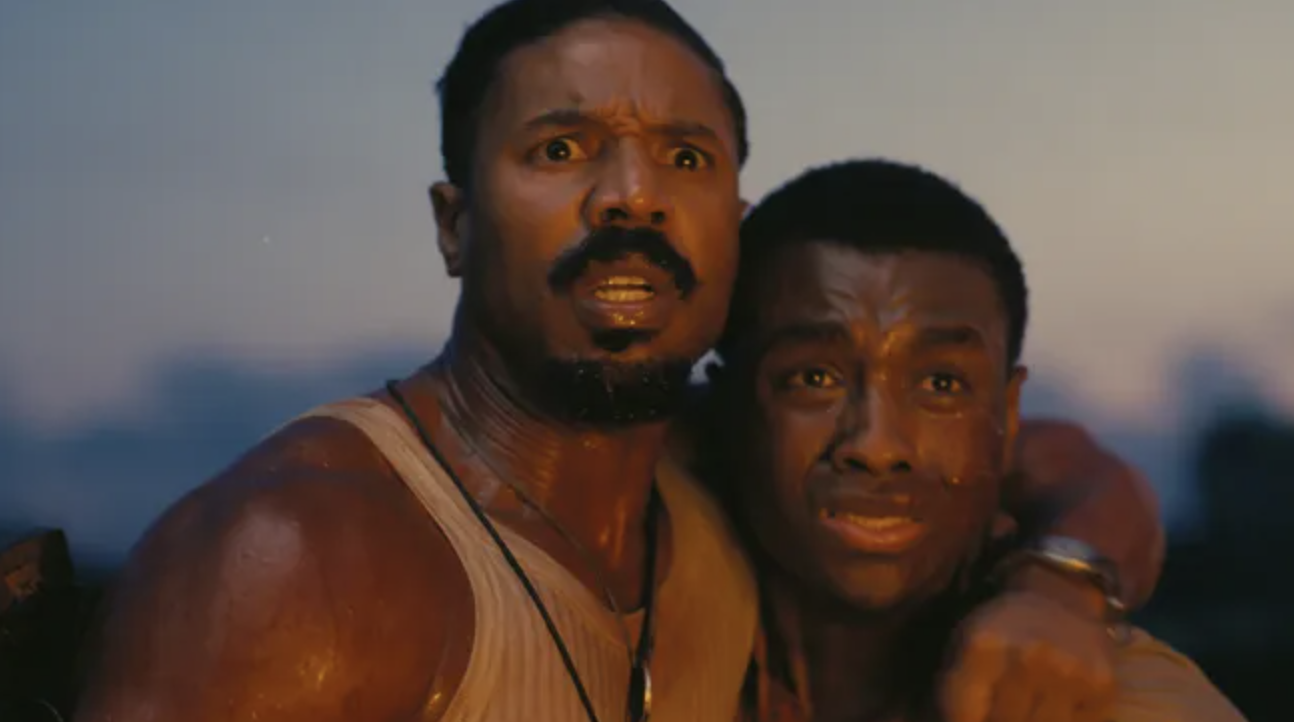
Either this week or next week, I'll be posting a list of my Top 10 Movies of 2025, along with some other lists like my favorite acting performances of the year. For today, I'd like to once again discuss my two absolute favorite movies of last year, and how they're in conversation with each other.
Both Sinners (my initial thoughts here) and One Battle After Another (original review here) are about societal hierarchy, family, belonging, and perhaps most importantly, about community. Sinners is a stunning accomplishment of filmmaking, storytelling, genre blending and performance, and one of the greatest feats it pulls off is making a Jim Crow-era vampire movie an unambiguous four-quadrant blockbuster. The first hour of Sinners is one of the most realized and immersive cinematic worlds I've ever visited, and lays so many bricks of interpersonal and cultural relationships and context that by the time the vampire shows up, you feel as though you're one of the select few welcome in this house.
Sinners is very much about the Black experience and the bloody history of hatred upon which America was established. Of utmost importance to the heroes and main characters of the film is the community that they belong to, and about those in near orbit (potential customers, acquaintances, employees) who are welcomed into the community – and those who aren't (the initial three (white) vampires, the Klan). The twins Smoke and Stack are returning to their last remaining community after a stint in a military community during the first World War and fleeing their gang community in Chicago after stealing from the Italians and the Irish. They bring Preacherboy into their circle, as he is their most beloved remaining blood relative. Preacherboy, meanwhile, is caught between communities of his own: his fellow sharecropping community and his pastor father, who is trying to get his son to rebuke the "sinful" world of playing music and dedicate himself to Christianity.
There are so many other intersecting communities and families at work here: the indigenous community that we only meet in passing, which understands what the vampires are and are proactive in trying to combat them; the Klansmen and other murderous White people who deny their existence to the world at large but seek to claim everything in sight through violence and bloodshed; Mary, who is "passing" but returns home to bury her mother and to seek love and acceptance with her chosen community; the vampires themselves, who claim enlightenment and seek unity, but have no concept of imposing their will other than force; Annie, who mourns both her infant daughter and Smoke, who was driven away by her death, and belongs to her own community as a Hoodoo practitioner and medicine woman. And I almost forgot to mention Bo and Grace Chow, entrepreneurs who by virtue of being neither Black nor White are allowed to operate on both sides of the street while only really being welcomed in by Smoke, Stack and their circle.
(I admit that Grace crossing the street on the main drag to illuminate that the two sides of the road were completely segregated passed me by on first watch, as I was so immersed on the direction and production design that I straight-up didn't even see what the movie was showing me. It's one of three absolute showstopper moments of direction in the film, along with the timebending musical performance at the heart of the film, and the aspect ratio change when the vampires barge in that still hits like a freight train thanks to home video presentation retaining that particular sleight of hand, which will forever have my deep appreciation and gratitude.)
The oppressive force pushing down on all of these intersecting communities is not the vampires who are the antagonists of the film, but the vampiric nature of America and its attendant stratification. This carries over into One Battle After Another, which offers a very striking look at the differences between chosen community and cultural community.
Ghetto Pat and Perfidia Beverly Hills (and their friends) are part of the revolutionary group The French 75, which has obvious influence from The Weather Underground. The group is named for the turn-of-the-20th-century artillery weapon that revolutionized trench warfare and modern battlefield brutality beginning in WWI, as well as the gin-and-champagne cocktail that jokingly packed the same kick as the weapon. It's a clever balancing act pulled off by Paul Thomas Anderson to leave to the imagination whether the revolutionaries are naming themselves after the weapon, the drink, or the likely answer: that they're naming themselves after the ironic allusion tying the two together. Regardless of the origins of their nomenclature, while the French 75 and resulting diaspora perform much good in the name of community and humanity, their actions are performative and attention-grabbing. They seek to liberate, but they also seek to gain notoriety. All of the members of the group, to some extent (and especially in the case of Perfidia) get off on the mayhem they create.
In contract to the French 75 we need to look at the other two big groups in OBAA: the Christmas Adventurers Club, and Sensei's community of immigrants who come under fire due to Lockjaw's aspirations to become a Christmas Adventurer. The CAC is an establishment white supremacist group deeply ingrained into the firmament of the American government, fully bought into the myth of White purity and using the mythology of Santa Claus as aspirational (although likely not believing in gifts to all good children). Sensei's cultural community of Hispanic and Latino immigrants comes under fire from Lockjaw's troops through no fault of their own; they're being used as cover and a convenient scapegoat for pursuing Pat and Perfidia's daughter, who is Lockjaw's loose end that can keep him out of the CAC. This closely-knit community of immigrants has nothing at all to do with the gears in motion in the story, but the state of America allows the military to run roughshod over a California town under the auspices of a drug bust and roundup.
The frantic Pat (or Bob, if you prefer) is in stark contrast to the easygoing nature of Sensei, not just because of Sensei's temperament but in their respective position within their community. Absolutely no one takes Bob seriously or deserving of respect, from Lockjaw to the police to the vestiges of the French 75, who cling so tightly to ceremony that they deny Bob vital information because he can't remember a bullshit full-of-itself password from nearly 20 years ago. He scrambles around, demanding someone help him, someone listen to him, while fumbling with his phone charger and trying to find a place to sit down. All while this is happening, Sensei is helping his community effortlessly and doing actual good in the world and for his people – in part because he's been doing this so long that it's all second nature to him, and in part because of the close-knit nature of the community, and the reality of what it's like to have been shunted into a corner of society so thoroughly that the community has no choice but to have learned how to operate as one at a moment's notice. Even while Sensei is shepherding dozens (hundreds?) of people to safety and treating them with tremendous love and respect, he still takes the time to listen to Bob, to try and reassure him, and even to offer him a few small beers. Sensei, more than anyone else in the story, actually helps Bob, even though Bob is not part of his community. But for Sensei, perhaps everyone is part of his community – everyone who matters to him, anyway.
OBAA is so clear about the chasm that lies between the French 75 and sensei's community, and about the dividing line between true heroism and performative buffoonery, yet still manages to make you root for Bob throughout, in part because Bob discovers – first through Perfidia's desertion, and then through his interactions with the ridiculous remnants of his former comrades – just how ridiculous his former life was. Bob's new community is his family, and it's the only thing he believes is actually worth caring about. He's closer to the truth now, and likely moves closer still when his daughter becomes radicalized at the end of the movie, teaching him that he can live in the modern world and care about others and do good without having to blow shit up and yell "Look at me!"
It's a tough time to live in America, but both of these movies emphasize how important a role community plays in our sanity and our salvation. Sort of an important thing to keep in mind these days. Thanks, Sensei.